


Blog
Oil Well Drilling Chemicals: What Keeps a Wellbore Stable in Iraq’s Oilfields

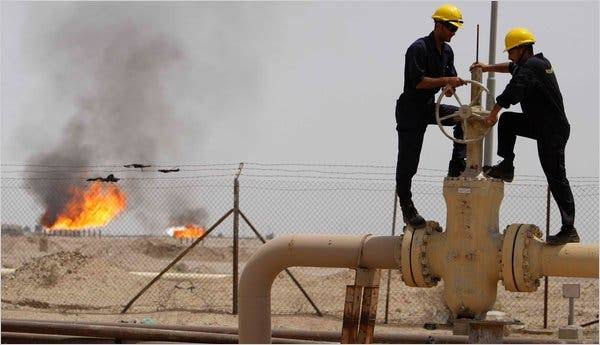
Drilling a well in southern Iraq is not the same job as drilling one in the North Sea or the Permian Basin. Formations around Basra, Rumaila, and West Qurna sit under high pressure, high temperature, and often unpredictable pore pressure zones. A drilling fluid that works fine on paper can fail within hours if it isn’t built with the right chemistry for these conditions. That’s the quiet, unglamorous work that drilling chemicals do — and it’s worth understanding what actually goes into the mud tank before a bit ever touches rock.
Why the Drilling Fluid Matters More Than the Rig
Most people picture drilling as a purely mechanical process: a bit turning, pipe going down, rock breaking apart. In reality, the fluid circulating through that pipe is doing most of the heavy lifting. It carries cuttings up to the surface, cools and lubricates the bit, controls formation pressure, and — critically — keeps the wellbore wall from collapsing before casing goes in. Get the fluid chemistry wrong, and you’re looking at stuck pipe, lost circulation, or a sidetrack that costs far more than the chemicals ever would have.
The Core Additives
Viscosifiers and rheology modifiers. Bentonite and polymer-based viscosifiers (such as XC polymer) give the mud enough carrying capacity to lift cuttings out of the hole, especially in horizontal or extended-reach sections that are becoming more common in Iraqi fields.
Fluid loss control agents. Products like PAC (polyanionic cellulose) and CMC reduce how much fluid filters into the formation. In permeable, unconsolidated zones this isn’t optional — excessive filtrate invasion leads to formation damage that hurts well productivity long before the well ever produces a barrel.
Shale inhibitors. Iraq’s shale sections can be reactive, swelling and sloughing when exposed to water-based mud. Potassium chloride, polyamine inhibitors, and glycols are used to hold these formations together and avoid the dreaded “gumbo” that packs off the annulus.
Weighting agents. Barite remains the standard for controlling formation pressure in deeper wells. Getting the mud weight right is a balance — too light and you risk a kick, too heavy and you risk fracturing the formation and losing circulation.
Lubricants and lost circulation materials. As wells go deeper and more deviated, torque and drag increase. Lubricant additives reduce friction along the drillstring, while LCM (fibrous, granular, or flake material) plugs off natural fractures or vugular zones common in carbonate reservoirs like the Mishrif formation.
A Local Consideration: Water Quality and Temperature
Makeup water in southern Iraq tends to carry high salinity and hardness, which changes how additives behave compared to fresh water systems used elsewhere. Formulations need to be adjusted — sometimes with different polymer grades or higher inhibitor loading — to keep performance stable. Bottom-hole temperatures in some deeper zones also push standard additives past their thermal stability limits, which is why thermally stable polymers are increasingly specified for HPHT sections.
Getting the Formulation Right the First Time
Drilling chemical selection isn’t something to improvise on location. It starts with formation data, offset well history, and expected pressure regimes, and it’s refined through lab testing before the fluid ever goes downhole. A supplier who understands both the chemistry and the specific geology of Iraqi basins can save operators real time and real money — because in drilling, the cost of the wrong additive is almost never just the additive itself.
Ard Al-Muthanna Chemical Industries supplies drilling chemical solutions formulated for the conditions operators actually face in Iraq’s fields. If you’re planning a drilling program and want additives matched to your formation and mud system, reach out through iraqchemmarket.com.
 Oil Well Drilling Chemicals
 Oil Well Cementing Chemicals
 Oil Well Acidizing Chemicals
 Refinery Chemicals
 Workover Chemicals
 Power Station Chemicals
 Gas Drilling & Production Chemicals
 Corrosion Inhibitors
 Foamers
 Water Treatment Chemicals
 Oil Production Chemicals